The Forgotten Feature That Makes Old Pixels Better for Gemini
Rediscovering Seamless Interaction: Why Older Pixels Outshine New in the AI Era
The Unexpected Superiority of Older Pixel Devices for AI Interaction
While the recent Pixel 10 series has garnered considerable attention since its August unveiling, praised for its advanced camera functionalities, Pixelsnap, and sophisticated AI integrations, one might assume it's the pinnacle for Google's AI, Gemini. However, a compelling argument suggests that, contrary to popular belief and Google's marketing, the Pixel 10 might not be the optimal device for Gemini's most engaging experience. Instead, this distinction could belong to some of Google's earlier Pixel iterations, and there's a distinct, impactful reason behind this assertion.
The Intuitive 'Squeeze' Feature: A Game-Changer for Gemini Engagement
When Google first introduced the Pixel 2 in 2017, a standout innovation was the \"Active Edge\" capability. This allowed users to simply squeeze the sides of their device to instantly summon the Google Assistant, making the digital helper consistently accessible. For those unfamiliar with Active Edge, its concept might seem unconventional. Yet, in practice, it offered unparalleled convenience. Users no longer needed to stretch their fingers across the display or fumble for the power button; a gentle squeeze during normal phone handling was all it took to magically invoke the Google Assistant.
The Enduring Charm and Practicality of Active Edge
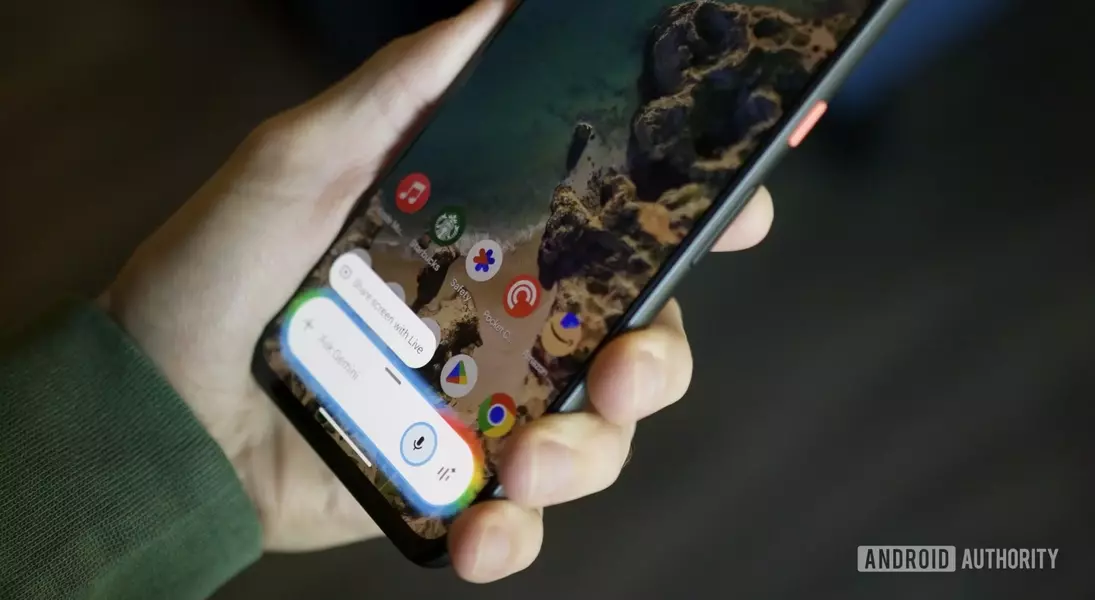
Active Edge was a staple feature, continuing through the Pixel 3 and Pixel 4 generations before its eventual discontinuation with the Pixel 5. Reflecting on this feature, particularly its potential synergy with Gemini, prompted a fascinating experiment. Retrieving an old Pixel 4, setting Gemini as the default assistant, and then performing the familiar squeeze revealed a delightful outcome: Gemini responded instantly, as if the feature were custom-designed for it. This seamless activation of Gemini by squeezing the Pixel 4 proved to be not only simpler but also more enjoyable than the current method of holding the Pixel 10's power button. Whether scrolling, retrieving the phone from a pocket, or picking it up from a desk, Gemini remained effortlessly accessible through a squeeze.
The Unreplicable Experience: Active Edge vs. Modern Activation Methods
Undoubtedly, activating Gemini via the power button or the \"Hey Google\" voice command is straightforward. However, Active Edge possesses an intrinsic quality that these methods lack. It liberates the power button to serve its primary function and prevents the accidental activation of other Gemini/Google Assistant devices within one's home. Furthermore, Active Edge adds an intangible element of delight and uniqueness. It imbues Gemini with a sense of being an integral, almost organic, component of the device, rather than merely another application. This engaging interaction makes the experience truly exceptional.
A Call for Revival: The Unfulfilled Potential of Active Edge in the Gemini Era
The likelihood of Active Edge making a return to future Pixel models appears slim. Google ceased integrating this feature after 2019, and in the intervening years, there has been no indication of its reinstatement. Nevertheless, re-experiencing the Pixel 4 with Active Edge in conjunction with Gemini underscores a significant missed opportunity. Active Edge stood out as one of Google's most distinctive Pixel innovations. Despite its forgotten status, its harmonious integration with Gemini suggests it would be a powerful tool for encouraging greater engagement with the AI. Reintroducing such a clever, delightful, and intuitive interaction method could profoundly enhance user adoption and appreciation of Gemini.