ANBERNIC RG 477M: A Redefinition of Portable Retro Gaming
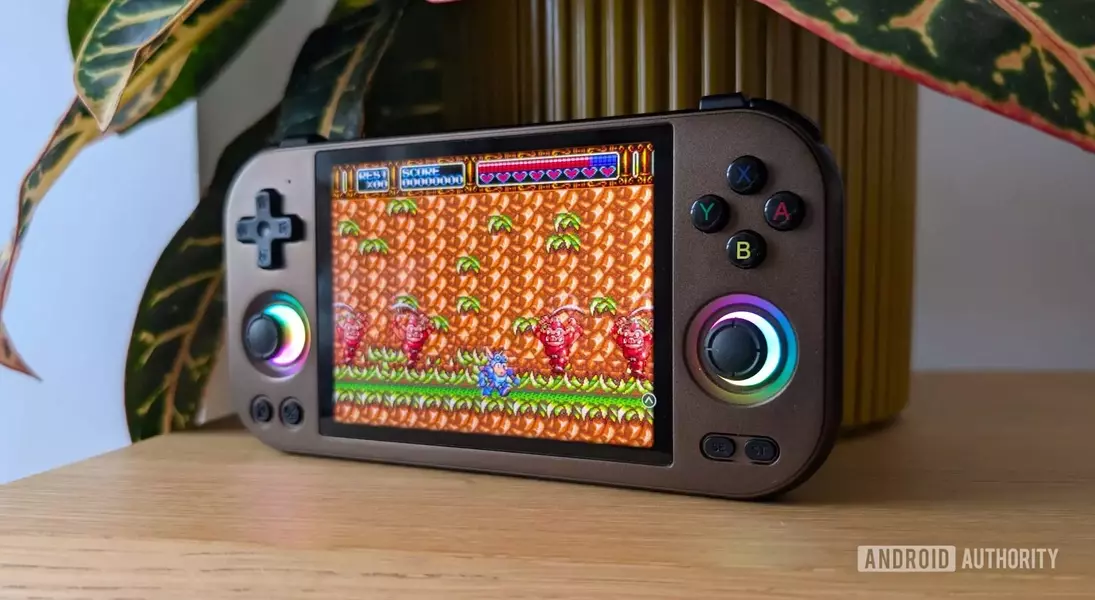
Experience Classic Games Anew: The RG 477M's Retro Revolution
Chasing the Ideal Gaming Handheld: A Personal Journey to 4:3 Perfection
My initial foray into modern portable emulation devices gravitated towards horizontal designs featuring widescreen displays, a preference shaped by systems like the PSP and Nintendo Switch. However, the compact screens characteristic of many ANBERNIC offerings didn't immediately capture my interest. This changed dramatically with the ANBERNIC RG Slide. Its 4:3 aspect ratio, coupled with a 120Hz refresh rate, proved to be a revelation. While the processing power of the Slide left something to be desired, I anticipated that ANBERNIC would eventually combine this exceptional display technology with a more robust internal architecture. That anticipation culminated in my recent experience with the RG 477M, a compact metal device that not only handles my cherished classic games but elevates their visual presentation to unprecedented levels.
Crafted for the Connoisseur: Dissecting the RG 477M's Premium Aesthetics and Controls
Before delving into its performance, a discussion of the RG 477M's physical attributes is essential. The 'M' designation signifies its metallic construction, specifically an aluminum alloy, which imbues the device with a sense of luxury. Its edges are elegantly curved, though a minor seam is discernible where the front and back panels converge. The RG 477M features a symmetrically arranged dual-stick layout, ideally suited for retro games that primarily rely on the D-pad. The analog sticks themselves, while positioned slightly low, offer excellent tactile feedback and a broad range of motion. Their Hall effect technology also guarantees the absence of dreaded stick drift. The D-pad, a critical component for retro gaming, is exceptionally well-executed, delivering a soft yet responsive feel without any false diagonal inputs. ANBERNIC's extensive experience in handheld manufacturing is evident in the precision of this component. The main action buttons are similarly soft and quiet, contributing to a pleasant user experience. Conversely, the inline shoulder buttons are notably loud, and their shorter length requires a slight adjustment in grip to comfortably access the R1 and L1 buttons, frequently used in older titles. The downward-firing stereo speakers are adequate, and a headphone jack is conveniently located alongside the charging port and microSD card slot at the bottom. Two rubberized strips on the rear aim to enhance grip, but their placement is somewhat off, failing to align perfectly with a natural hand position, even for those with smaller hands. Although a silicone case is provided, I found myself largely foregoing its use; the allure of the unadorned metal construction outweighed the minimal risk of drops. Furthermore, the color palette, particularly the 'Chocolate Bronze' variant I reviewed, lacks visual appeal. I hold out hope for a future plastic version with a wider array of color choices and a more accessible price point. Despite these minor criticisms, the metal chassis contributes to a satisfying heft, weighing in at 355g. This weight is substantial enough to convey quality without causing fatigue during extended gaming sessions, unlike some larger, albeit slightly heavier, handhelds.
Reimagining the Past: How the RG 477M Elevates Classic Gaming with Modern Technology
The true brilliance of the RG 477M in enhancing retro gaming lies not just in its physical design, but in its exceptional 4.7-inch 120Hz display. I am now convinced that a 4:3 aspect ratio is paramount for vintage gaming handhelds, and this screen's resolution is perfectly calibrated. It facilitates flawless 4x pixel-perfect upscaling for PlayStation and Nintendo 64 titles, eliminating unsightly black bars. Even older NES and Genesis games benefit from 4x upscaling, albeit with minimal black borders. Virtually every classic home console game appears stunning on this display. While less ideal for handheld systems like the Game Boy, Game Boy Advance, or PSP, it remains more than serviceable. The PSP is arguably the only console I would avoid playing on this device due to the substantial black bars; however, numerous 16:9 handheld alternatives exist for those prioritizing such compatibility, often at a lower cost than the RG 477M. The 120Hz refresh rate is the RG 477M's secret weapon. Although seemingly counterintuitive for retro games that typically ran at 30 or 60 frames per second, it enables a technique called black frame insertion. This feature intersperses black frames between rendered frames, significantly enhancing animation fluidity on contemporary screens. While it requires some configuration adjustments, the visual payoff is remarkable. The RG 477M's screen also offers ample brightness to compensate for the slight dimming caused by black frame insertion. For users who prefer minimal setup, the RG 477M arrives largely pre-configured, with emulators for various systems already installed and optimized. The RG Launcher, while not my preferred choice, is surprisingly robust, allowing for immediate gameplay after loading ROMs. However, some pre-installed emulators were outdated or inferior to available alternatives, necessitating manual updates. The pre-configured RetroArch, for instance, was in Chinese, requiring a language change. This might be specific to review units, and hopefully, retail versions will be free of such issues. Ultimately, I opted for a complete reinstallation of RetroArch, discarding the default core settings. ANBERNIC has also integrated unique AI software for on-screen translations and puzzle-solving assistance. While an intriguing feature, its relevance to core retro gaming is limited, and users can largely disregard it without missing out. In essence, the RG 477M largely comes pre-configured, but still benefits from user customization for optimal performance.
Unleashing Unprecedented Power: The RG 477M's Performance and Hardware Prowess
A 120Hz display can only truly shine when backed by sufficient processing power, a deficiency noted in the RG Slide. The MediaTek Dimensity 8300 chipset powering the RG 477M represents a significant leap forward. This is ANBERNIC's second device to feature this SoC, following the larger RG 577, and it proves to be an excellent fit. Benchmarking tests demonstrate the RG 477M's clear superiority over similarly priced handhelds, including the Retroid Pocket Flip 2 (Snapdragon 865) and ANBERNIC's own RG Slide (Unisoc T820). While not on par with high-end devices like the AYANEO Pocket ACE or AYN Odin 2, the enhanced processing capability significantly improves emulation performance for systems up to and including PS2 and GameCube. GPU performance, though strong, presented a notable caveat: stability. Stress tests revealed average stability scores of 50-60%, a concerning figure compared to the 90-99% seen in most other handhelds. This instability could stem from driver issues or pre-release software, but critically, even the lowest scores surpassed those of competitively priced devices. Thermally, the RG 477M performs admirably, with temperatures rarely exceeding 36 degrees Celsius, ensuring the metal body remains comfortable to the touch. The only drawback is the fan, which can become quite loud and emit a high-pitched whine under heavy load, though headphones effectively mitigate this. The noticeably loud shoulder buttons also make it unsuitable for quiet environments. The Dimensity 8300 chipset, while powerful, does exhibit some instability. In terms of emulation, the device flawlessly handled everything up to PS2 games. However, it's not recommended for more demanding systems like the Nintendo Switch due to driver limitations. PC game emulation faces similar challenges, though future driver improvements for Mali GPUs could offer a solution. For Android games, the RG 477M ran all tested titles with ease, with exceptions only for games lacking chipset support. The 5,300mAh battery provides a respectable seven to ten hours for retro games and three to four hours for PS2 titles, a solid duration for its size. Charging is also efficient, reaching a full charge in approximately 90 minutes with 27W charging.
The Verdict: Is the ANBERNIC RG 477M the Right Choice for Your Retro Gaming Needs?
The ANBERNIC RG 477M initially appears to be a triumph for the company, yet its most significant hurdle is its price. Starting at 9.99 for the 8GB+128GB model and climbing to 9.99 for the 12GB+256GB version I reviewed, it enters a price bracket where the AYN Odin 2, with its more powerful Snapdragon 8 Gen 2 chipset, offers a compelling alternative. While more expensive than the Retroid Flip 2, the RG 477M justifies its cost through its superior screen and refresh rate, making a tangible difference for retro titles. Other alternatives, mostly from ANBERNIC itself, include the RG Slide, which offers a unique sliding mechanism but lacks the RG 477M's raw power. The RG 406H, another 4:3 console, is more affordable but sacrifices the metal build and the RG 477M's performance and refresh rate. I personally hope ANBERNIC introduces a plastic version of the RG 477M at a lower price point in the future. The RG 477M currently stands in a league of its own. After just a week, it has become my preferred device for emulating classic home consoles, even over more expensive and powerful widescreen alternatives. The ability to apply CRT shaders and play without black bars creates a profoundly immersive and nostalgic experience, akin to using original hardware. For those seeking this specific retro gaming ambiance, the premium price is well worth it. There's also good news for early adopters: the RG 477M launched with a discount for the first 72 hours, bringing the base model down to a more attractive 9.99. This makes it a much easier recommendation, and such significant price reductions are unlikely to reoccur for at least six months.